Showing posts with label hypercars. Show all posts

Monday, September 9, 2013

Bugatti Veyron Vitesse Legend Edition “Jean Bugatti”

bugatti veyron and bugatti 57sc atlantic
The first in the “Les Légendes de Bugatti” (Bugatti Legends) series, the Grand Sport Vitesse ‘Legend Jean-Pierre Wimille’, has already been released at Monterey Car Week earlier in the year. IAA Frankfurt Motor Show 2013 is the setting for the second Legend to be revealed, the Bugatti Veyron Vitesse Legend Edition “Jean Bugatti”. As the name suggests, this special edition Veyron pays tribute to Jean Bugatti, son of the company founder and creator of the Type 57SC Atlantic.

[gallery type="rectangular" ids="2255,2256,2257,2258,2259,2260,2261,2262,2263,2264,2265,2266,2267,2268,2269,2270,2271,2272,2273,2274,2275,2276,2277,2278,2279"]


Bugatti's Press Release


IAA 2013: The Bugatti Legend "Jean Bugatti" receives its world premiere

The second vehicle in this six-part edition pays tribute to Jean Bugatti, son of the company founder and creator of the Type 57SC Atlantic
Production of the second model is strictly limited to a run of three vehicles, as it was with the first in the Bugatti Legend series


Molsheim / Frankfurt, 9 September 2013. Following the successful launch of its "Les Légendes de Bugatti" (Bugatti Legends) series a few weeks ago in Pebble Beach in California, Bugatti presents the second vehicle in this exclusive edition as a world premiere at the 65th International Motor Show in Frankfurt. The French luxury car manufacturer intends the Bugatti Grand Sport Vitesse "Jean Bugatti" to be a celebration of the oldest son of company founder Ettore Bugatti and his most famous creation, the Type 57SC Atlantic. Like all other five models in the Legend series, the "Jean Bugatti" is limited to three vehicles. It costs 2.28 million euros (plus tax and other charges).

With its "Jean Bugatti" Legend model, Bugatti pays homage to a prominent figure in 20th century automotive history. Gianoberto Carlo Rembrandt Ettore Bugatti, known as Jean, was the eldest son of Ettore Bugatti and the most gifted of his four children. From the late 1920s onwards, Jean used his own structural and design ideas to exert more and more influence over the development of the company located in Molsheim, Alsace. In 1936, he took over as head of the company at the age of 27. By the time of his tragic accidental death in 1939, Jean had secured his place in automotive history thanks to his pioneering engine and chassis designs and concepts for vehicle bodies.

"Jean Bugatti is a Bugatti legend," says Dr Wolfgang Schreiber, President of Bugatti Automobiles S.A.S. "Along with his father Ettore, Jean played a critical role in shaping our brand. Jean managed to combine the artistic roots of Bugatti with his father's innovative automotive technology, and from that developed a design which is still reflected in the brand today, finding expression in our brand values of 'Art, Forme, Technique'."

One of the most extraordinary designs created by Jean Bugatti has to be the Type 57SC Atlantic, one of the most exclusive and exceptional sport coupés ever built and ranking among the most expensive vintage cars in the world. The Legend vehicle to be unveiled in Frankfurt is a call back to La Voiture Noire ('The Black Car'), an Atlantic model which was driven by Jean Bugatti himself and has been lost since the Second World War.

"The Bugatti 57SC Atlantic is an icon. For many, it is one of the most elegant and valuable sports cars in automotive history," asserts Wolfgang Schreiber.

"Jean Bugatti was a gifted car designer who knew to mirror the 1930s style of avant-garde in the design of the Bugatti car bodies," explains Achim Anscheidt, Chief Designer at Bugatti. "His jet black La Voiture Noire was more than just Jean's 'private' car. It was also his most impressive work of art – breathtakingly sporty dimensions paired with fluid, elegant lines and the unmistakeably expressive Bugatti DNA."

The technology in the Bugatti Legend Edition "Jean Bugatti" is based on the Bugatti Veyron 16.4 Grand Sport Vitesse, whose 8-litre W16 engine generates an enormous 1,200 PS and an unparalleled 1,500 Nm torque at 3,000 to 5,000 rpm, and which can go from 0 to 100 km/h in 2.6 seconds.

Design: For the first time ever, the Bugatti horseshoe sparkles in precious platinum

In developing the Jean Bugatti Legend Edition, the designers at Bugatti aimed to follow the concept of its historic predecessor, the Type 57SC Atlantic La Voiture Noire, as closely as possible.

Exterior: The body of the Jean Bugatti Vitesse Legend Edition is constructed entirely from jet black, clear-coated carbon fibre, making it the embodiment of elegance and the apex of technical engineering. The use of platinum lends an air of extravagance to the vehicle, with the famous Bugatti horseshoe on the front grille and the EB logo on the rear taking on a resplendent appearance. Bugatti is using this precious material for the very first time on the exterior of one of its modern models.

The vehicle's elegant, minimalist appearance is further punctuated by its wheels, which feature black diamond-cut rims.

In reference to the Legend Edition's namesake, the signature of Jean Bugatti has been lasered onto the petrol and oil cap and painted Arctic grey.

Interior: The designers also took care to adhere to the motif of the historic La Voiture Noire as much as possible for the interior of the Vitesse Jean Bugatti Legend Edition. As such, it has been fully fitted out in leather. The Vitesse will also feature the same beige and brown tones that were present in the Type 57SC Atlantic. The seats, instrument panel, steering wheel, dash panel, centre console, door trim panels and windscreen crossmember are all rendered in chocolate brown.

As in the original vehicle, the chocolate brown is contrasted against the leather upholstery in a light beige silk colour across the extended centre console. This upholstery is continued in the footwell, the outer door trim panels and the handle recesses. The colour of the decorative stitching in the vehicle has been selected to complement the leather used.

The intricate, particularly eye-catching embroidery on the doors and the cover of the rear storage compartment once again harks back to the vehicle's legendary predecessor, given that the side silhouette of the Type 57SC was embroidered onto the chocolate brown doors using contrasting beige silk thread. From a bird's eye view, the Atlantic's silhouette is immortalised using brown thread for decorative stitching on the rear beige-coloured storage compartment.

The results of this passion for detail and the desire to use the finest materials throughout the engineering process can be observed in the interior's steering wheel as well – as for the exterior of the vehicle, the EB logo has been styled in gleaming platinum. Also staying true to the original Type 57SC is the selector lever, which is rendered in valuable rosewood.

Additional specific Legend Edition features in the vehicle include a leather insert embossed with the lettering "Les Légendes de Bugatti" in the extended section of the centre console, and door sill plate displaying the likeness and signature of Jean Bugatti.

A historic predecessor: the "Voiture Noire"

Just four Type 57SC Atlantic vehicles in total were built between 1936 and 1938. Only two of these vehicles still exist today in their original condition. The Atlantic is the most famous version of the Type 57. At the time, Jean Bugatti wanted to offer a motorsport version of the standard model, thereby resulting in production of the SC version (SC stands for supercharged).

Jean Bugatti, whose skill in developing unique body designs was already proven by the Type 41 Royale, Type 55 Roadster and Type 50, was responsible for the shape and style of the Atlantic, which was intended to be extremely light and aerodynamic. Aluminium was the material chosen, giving the Atlantic its unmistakable design feature – a clearly accentuated dorsal seam which runs at a right angle from the windscreen to the rear bumper and effectively welds the two halves of the aluminium body together. This element continues to play a fundamental role in vehicles designed by Bugatti even today. As the floor of the vehicle sits between the longitudinal chassis members rather than on the frame itself, this means that the wheels are offset from the body and accentuated by enormous wings, thereby providing the car with a footwell. Seen from above, the extremely long bonnet flows to the rear of the vehicle in an oval shape, further highlighting the graceful and elegant design of the Atlantic.

The sport coupé was equipped with a straight-eight engine with 3,257 cm3 displacement, which produced 200 PS. However, even though it was able to reach speeds of over 200 km/h at the time, it was never entered into a race.

The specific Atlantic which served as the godfather of the Jean Bugatti Legend Edition is the legendary La Voiture Noire, which was the first of four vehicles produced in total. It belonged to Bugatti and was lost in transit amid the confusion of World War Two. The location and circumstances surrounding its disappearance are still shrouded in mystery.

Tuesday, August 13, 2013

Video: McLaren F1 and Ferrari F40 vs Analogue Rivals | evoTV

Long live the KING! 


This test brings together some of the greatest analogue super cars - the ones that make you work hard as a driver, but are hugely rewarding - where we discover what they are all about, and why we love them. The McLaren F1 goes up against the Ferrari F40 and F50, Porsche Carrera GT, Noble M600, Pagani Zonda F and Lamborghini Murcielago LP670-4 SV.


Thursday, August 8, 2013

Video: Alonso drives LaFerrari

F1 Driver Fernando Alonso takes the 963hp Ferrari LaFerrari for a spin around Maranello


Before heading for Budapest and the Hungarian Grand Prix, Fernando Alonso had the opportunity to assess for himself the very latest phase of development of the quickest car ever produced in Maranello for everyday road use, not just exclusively on track; the LaFerrari.

Alonso drives LaFerrari

Today, we present a video made at the time: judging from his efforts, Fernando enjoyed every one of the 963 horsepower on offer from the combination of the V12 engine (800) and the electric motor (163) which powers the first hybrid car to come through the gates on Via Abetone Inferiore. Along with his team-mate Felipe Massa, the Spaniard was involved right from the start in the project and even on this occasion he contributed valuable insights to the team of engineers and test drivers involved in bringing to life and developing this extraordinary car.

Source: [Youtube ferrariworld]

Monday, August 5, 2013

Pagani Zondas at Wilton House 2013

6 Pagani Zondas attended at Wilton House 2013


[gallery type="rectangular" ids="2077,2078,2080,2081,2082,2083,2079"]

Photo Source: [facebook.com/PaganiAutomobili]

Sunday, August 4, 2013

Ferrari P4/5 by Pininfarina & P4/5 Competizione Together

The one of a kind Ferrari P4/5 Pininfarina and the P4/5 Competizione of Scuderia Glickenhaus together  Video and Gallery


Ferrari P4/5 by Pininfarina and P4/5 Competizione Glickenhaus


James Glickenhaus' contributions to the automotive world are undeniable. But for some reason, the Ferrari P4/5 by Pininfarina and its racing alter ego, the P4/5 Competizione have never been together in the same place. Now they have.


As the gallery shows, the two cars do look a lot alike, though there are notable differences--and they're not all related to the Competizione's racing lifestyle.


The original, road-going P4/5 by Pininfarina is based on a Ferrari Enzo, rebodied at the cost of about $4 million by Glickenhaus to echo the look of Ferrari's 1960s race cars. The P4/5 Competizione is based on a much less exotic F430 chassis.


Ferrari P4/5 by Pininfarina and P4/5 Competizione Glickenhaus


Regardless, these are two beautiful cars, and seeing them together is like seeing a distant but entangled quantum pair united at long last.


Head over to the official P4/5 Competizione racing site for dozens more fantastic photos.


Video


Photo Gallery


[gallery ids="2056,2055,2054,2053,2052,2051,2046,2050,2049,2048,2047"]

Source: [motorauthority.com/]

Saturday, August 3, 2013

Top Gear drives the Jaguar C-X75

Before Jaguar put its 220mph, hybrid C-X75 hypercar on ice, TG got a drive…


Jaquar CX-75[gallery ids="2028,2029,2030"]


Thinking about it afterwards, another 2mph would have been nice. Because 2mph would have taken me to 186, which keen students of unit conversion will recognise as a nice round 300kph. The car certainly isn't the limiting factor, its big digital speedo's digits scrolling hungrily and dizzily away towards the maximum of about 220. But right now, 184mph looks like a big enough number to me. My mind is on matters other than arithmetic: it's streaming with rain, a corner is approaching - fast - and I'm driving a car that's precious and irreplaceable... albeit, I'm thinking, not as precious as my passenger and me. Time to get on the brakes.


Words: Paul Horrell
Photography: Lee Brimble
More photos: [http://www.topgear.com]


This feature was originally published in the July 2013 issue of Top Gear magazine

Source: [topgear.com]

Monday, July 15, 2013

Video: Jenson Button Drives the McLaren P1 at Goodwood 2013

A beautiful black McLaren P1 at 2013 Goodwood Festival of Speed


The incredible McLaren P1 makes its dynamic debut at the 2013 Festival of Speed with Formula One star Jenson Button at the wheel.


Monday, June 24, 2013

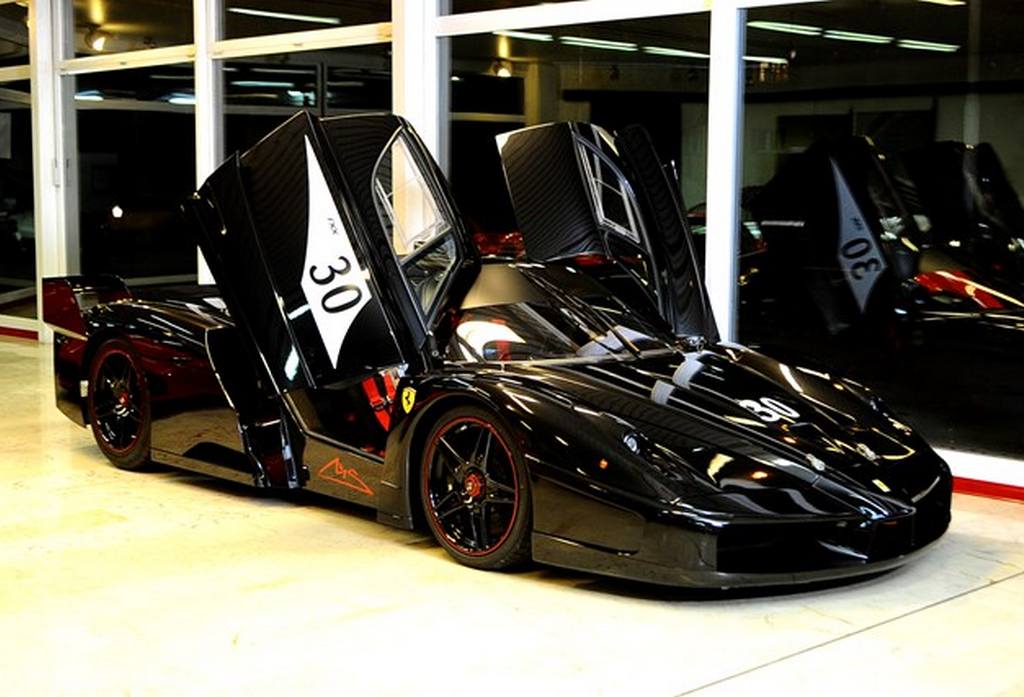
For Sale: Michael Schumacher’s Black Ferrari FXX

Anyone to lend me $2.6 million


For Sale: Michael Schumacher's Black Ferrari FXX

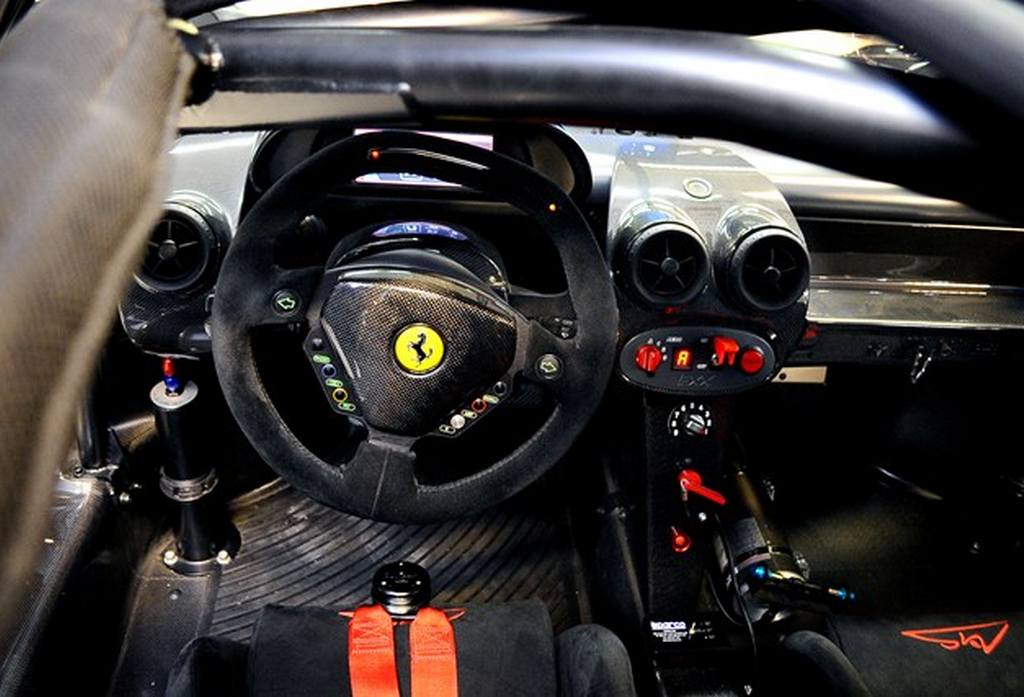
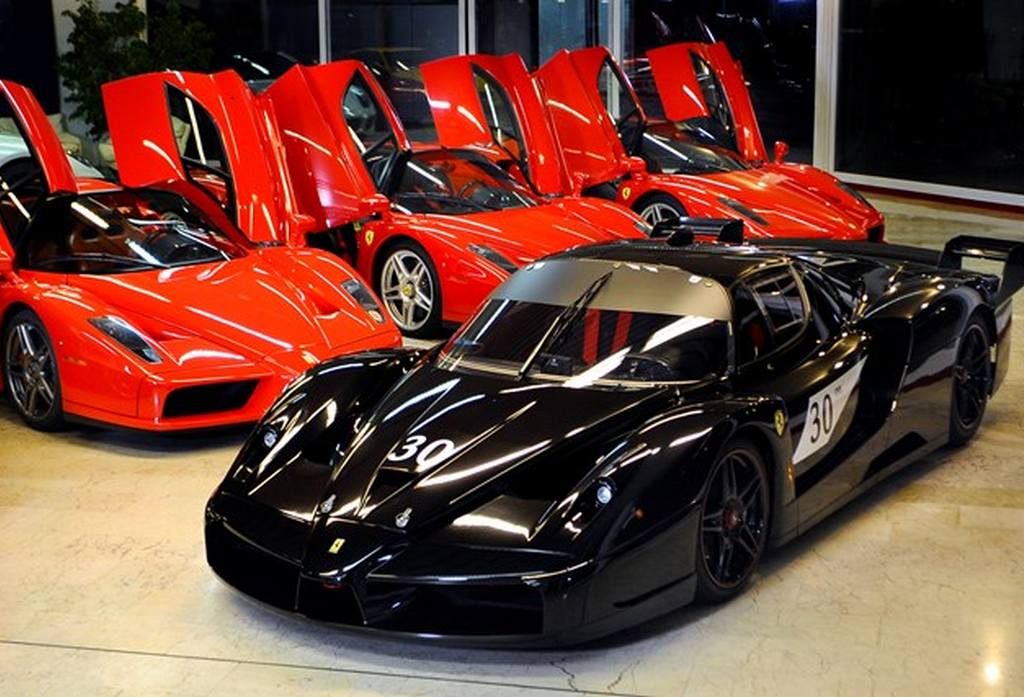
The infamous black Ferrari FXX once owned by seven time Formula One World Champion Michael Schumacher is currently for sale for the equivalent of $2.6 million U.S. in Switzerland.

Schumacher’s black Ferrari FXX got worldwide recognition when it featured on an episode of Top Gear in mid-June 2009 where Michael Schumacher was dressed as the Stig and drove it around the test track in a record-setting time.

Despite having attended numerous motorsport events with Schumacher at the wheel, the car has travelled just 900km and is one of just 30 units to have been produced.

For Sale: Michael Schumacher's Black Ferrari FXX

As a reminder, the Ferrari FXX is powered by an upgraded variant of the 6.0-liter V12 engine found in the standard, road-going Ferrari Enzo. Displacement has been increased from the 6.0-liters of the standard Ferrari Enzo up to 6.3-liters. Consequently, the Ferrari FXX produces an insane 790hp at 8,500rpm and 506lb-ft of torque at 5,750rpm. As a result, the Ferrari FXX can hit 60mph in around 2.5 seconds, before hitting a claimed top speed of 243mph.

For Sale: Michael Schumacher's Black Ferrari FXX

The Ferrari Enzo and Ferrari FXX were recently replaced by the 2014 Ferrari LaFerrari. The Ferrari LaFerrari gets a 6.3 liter V12 which is connected to an electric motor similar to the system on the McLaren P1. The Ferrari F150 V12 has an output of 800hp at 9.000 RPM and 700Nm at 7.000 RPM while its electric motor has a maximum output of 163hp and 270Nm of torque. That delivers a total combined power output of 963hp, allowing the new Ferrari Enzo to do 0-100 km/h in less than 3 seconds, 0-300 km/h in 15 seconds and a top speed in excess of 350 km/h.

[Source: gtspirit.com]

Friday, June 7, 2013

The "F" word... One of a kind Ferrari P4/5!

Ferrari P4/5 by Pininfarina


Ferrari-P4-5-Pininfarina-Glickenhaus-TopGearPhoto

The Ferrari P4/5 (officially known as the Ferrari P4/5 by Pininfarina) is a one-off sports car made by Italian sports car manufacturer Ferraribut redesigned by Pininfarina for film director and stock exchange magnate James Glickenhaus. The car was an Enzo Ferrari but the owner James Glickenhaus preferred the styling of Ferrari's 1960s race cars, the P Series. The project cost Glickenhaus US$ 4 million and was officially presented to the public in August 2006 at the Pebble Beach Concours d'Elégance. Several websites were allowed to publish images of the clay model in July 2006.


Development


In March 2005 James Glickenhaus, stock exchange magnate and known car collector, was approached by Pininfarina who asked if he was interested in commissioning a one-off car. Andrea Pininfarina, grandson of the company’s founder later said "The Ferrari 612 Kappa and this P4/5 are the first. But we want to grow this business." indicating that Pininfarina is interested in producing other unique cars. Glickenhaus replied that he would like a modern Ferrari P, and in June of that year he signed a contract with Pininfarina to produce the car including the price, approximately US$4 million though in an interview he said "I feel they gave me more than I expected". Glickenhaus purchased the last unsold Enzo Ferrari and upon receipt of the car he took it to Pininfarina to be redesigned similar to his 1967 Ferrari 330 P3/4 chassis 0846 which he also delivered to Pininfarina. Pininfarina's styling team leader, Ken Okuyama said that "Pininfarina wanted to stay away from retro design and move towards a more forward thinkingsupercar" as they were excited by the opportunity to build the car, not just design it.


Ferrari_P4-5_with_Ferrari_P3-4

Its design began in September 2005 with sketches by Jason Castriota moving through computer aided sculpture and stringent wind tunnel testing. More than 200 components were designed especially for the car. Most components, including the engine, drivetrain, are modified from the original Enzo Ferrari. The Vehicle Identification Number (VIN) is unchanged from the Enzo from which it was derived. The P4/5 was publicly revealed on August 18, 2006 at the Pebble Beach Concours d'Elégance and shown again at the Paris Motor Show in late September.


Upon seeing P 4/5 Luca di Montezemolo felt that the car deserved to be officially badged as a Ferrari and along with Andrea Pininfarina and James Glickenhaus agreed that its official name would be "Ferrari P 4/5 by Pininfarina". Ted West wrote an article in Car and Driver about how this came to be "The Beast of Turin".

Ferrari_P4-5_by_Pininfarina_1

On September 2009, Glickenhaus announced his intention to race a new version of the P4/5 in the 2010 24 Hours Nürburgring. The car, called the P4/5 Competizione, would not be a conversion of his road car but instead an entirely new car with a Ferrari chassis, VIN number and drivetrain. On May 2010 however, it was revealed that the Competizione would in fact be raced in 2011, based on a 430 Scuderia. It would be built to FIA GT2 standards and raced by Scuderia Cameron Glickenhaus in an Experimental Class under the direction of Paolo Garella, former Head of Special Projects at Pininfarina. Ferrari completely distanced themselves from the P4/5 Competizione project in 2011, refusing to sell the team parts for vital engine rebuilds between races.

Specifications


The Ferrari P4/5 can accelerate from 0-100 kilometres per hour (0-62 mph) in 3.0 seconds (0.14 seconds quicker than the Enzo). It has a top speed of 233 mph (375 km/h). The car has a frontal area of 1.906 square metres (20.52 sq ft), but the sharp nose and smooth curves mean it has a drag coefficient of only 0.34.


Ferrari-P4-5-Pininfarina-Glickenhaus

Interior


The interior of the P4/5 was designed by Glickenhaus himself with an iPod nano stereo and a tablet PC which features not only GPS but a3D model of the car as well as a complete parts list and manual for easy servicing. The P4/5 also sports improved air conditioning over the Enzo and a high-strength alloy roll bar redesigned because the original was too thick and obstructed Glickenhaus' view. The seats are custom built, Glickenhaus' and his son's bodies were scanned so Pininfarina could mould the seats for their comfort, accessibility and view of the road (as with race cars). With a frame of carbon fibre composite, the seats are covered with a black mesh and red leather as selected by Glickenhaus' daughter. Pininfarina rearranged the wiring of the car so as to make the car easier to service and 595 lb (270 kg) lighter than the Enzo.

Exterior


The exterior of the car is made entirely of carbon fibre reinforced plastic and is similar in shape to the Ferrari 330 P4 as Glickenhaus requested, however it has been called a "rolling history of Ferrari-racing-DNA" sharing elements from several historic Ferrari vehicles, not just the 330 P4. The rear window is similar to that of the Ferrari 512S, the side vents are similar to the Ferrari 330 P3 and the nose is similar to that of the Ferrari 333 SP which improves cooling and the car's frontal crash safety. The butterfly doors (similar to those of the McLaren F1) are designed such that even at 160 mph (260 km/h) there is no wind noise. The improved aerodynamics give the car greater downforce, yet less drag, than the Enzo, which makes the car more stable than the Enzo at high speeds.


Ferrari_P4-5_by_Pininfarina

Powertrain


The P4/5 has the same engine as the Enzo Ferrari it was built on, a 65° Dino F140 V12.  The 12 cylinders have a total capacity of 5,998 cc (366 cu in), each with 4 valves.The redline rpm at 8200 and the torque of 485 lb·ft (658 N·m) at 5500 rpm are both the same as the Enzo, but it produces marginally more power with 660 brake horsepower (492 kW) at 7800 rpm. The P4/5 uses the 6 speed semi-automatic transmission of the Enzo with black shifting paddles behind the wheel. It has two directional indicator buttons, one mounted on each side of the steering wheel.

Ferrari_P4-5_by_Pininfarina_Engine

Chassis


Much of the suspension was unchanged from the original Enzo, with the same push-rod suspension at the front and rear, and the same Brembo carbon-ceramic anti-lock disc brakes with diameter of 340 millimetres (13.4 in) at the front and rear.[1] The aluminium alloy wheels are 510 millimetres (20 in) in diameter, the front tyres have codes of ZR 255/35 and the rear, ZR 335/30.


ferrari_p4_5_pininfarina_wheel

Photo Gallery


[gallery ids="1615,1614,1613,1612,1611,1608,1609,1610"]

[Source: Wikipedia]


Thursday, June 6, 2013

Video: National Geographic on Pagani Huayra !

The greatest video ever made about the Pagani's Hypercar, The Huayra! An Absolute must watch!


[youtube http://www.youtube.com/watch?v=lmDG6Pf4jfI]


[gallery ids="1587,1590,1591,1588,1589"]

Video: World's Fastest GT-R @382 Km/h Alpha 12 by AMS

AMS Performance sets a new world speed record for Nissan's GT-R R35 hitting 382 kph with the Alpha 12 !


Few months ago we posted about the fastest japanese GTR, the Top Secret GTR R35which had hit 377 km/h in Nardo Italy.

Top_Secret_GTR_R35_Nardo_Italy_377km_h

Now  AMS Performance has made the Nissan GT-R Alpha 12 with 1,700 horsepower under the hood. Recently AMS Super GT-R became  the fastest GT-R in the world  hitting an incredible top speed of 382.16 km/h (237.46 mph). The Alpha 12  GT-R is also capable of running the 1/4-mile in 9.44 seconds and a speed of 161 mph, goes from 0 to 100 km/h (62 mph) in 2.99 seconds, from 0 to 200 km/h (124 mph) in 6.50 seconds and from 0 to 300 km/h (186 mph) in 12.37 seconds.

[youtube http://www.youtube.com/watch?v=6MzpaNu74Ts]
Updates made by AMS include an updated twin-turbo kit and increased boost pressure. On top of that, AMS also went out and reinforced the block to ensure that the car’s engine could handle all the horses galloping underneath the hood. A base AMS 12 can develop a total of 1,318 horsepower, while in the 12+ version cranks the final output to up to 1,700 horsepower.


Nissan-GT-R-AMS-Top-Speed-World-Record-700x367 nissan-gt-r-ams-alpha-12-top-speed-world-record


[Source: Topspeed.com]


Thursday, May 30, 2013

2013: Infiniti Emerg-E Concept

The Lotus Evora Based Hybrid Supercar Could Become Reality


On top of the array of supercars present at the Concorso d’Eleganza  in Italy, a selection of concept cars were present including the unique Infiniti Emerg-E concept supercar which Infiniti debuted back at the Geneva Motor Show 2012.

infiniti-emerg-e-sports-car-concept

Powering the Infiniti Emerg-E are a pair of electric motors with each powering their own rear wheel. All combined, these two compact drivetrains produce an impressive 402hp and 738lb-ft of torque helping to rocket the Infiniti Emerg-E to 62mph in just 4 seconds. Furthermore, the Infiniti Emerg-E also features a tiny back up 1.3-liter three-cylinder engine producing an additional 47hp which helps to charge the bank of lithium-ion batteries.

First Look: Infiniti Emerg-e concept

While it’s currently unclear if the Infiniti Emerg-E will ever hit the production line, Infiniti has continually declared its interest in developing a brand new halo sports car with some suggesting that the car could be based off the Infiniti Emerg-E as well as the Infiniti Essence Concept.

[youtube http://www.youtube.com/watch?v=_vtrYc5BJnI]


Photo Gallery


[gallery ids="1507,1506,1508,1509,1511,1516,1512,1513,1514,1515"]

[Source: GTSpirit.com]

Wednesday, May 29, 2013

Video: Ferrari F12 v Lamborghini Aventador v Aston Martin Vanquish by Evo

The Ferrari F12 Berlinetta tackles the Lamborghini Aventador and Aston Martin Vanquish in our supercar supertest video


Ferrari_F12_Vs_Lamborghini_Aventador_Vs_Aston_Martin_Vanquish_2


Can the Ferrari F12 Berlinetta match the GT credentials of the Aston Martin Vanquish and outperform the wild Lamborghni Aventador? We head to Italy to find out...


[youtube http://www.youtube.com/watch?v=BMHpMCVIuEc]
It should make for a fascinating battle. The Ferrari F12 is one of the punchiest cars to wear the Prancing Horse badge, its 6.3-litre naturally aspirated V12 engine producing 730bhp and 509lb ft, enough to hustle the 1630kg past 211mph via a 3.1sec 0-62 time. With a seven-speed DCT gearbox, rear-wheel drive and a host of electronic trickery - E-Diff, F1-Trac - it weighs in at £239,736.

 Ferrari_F12_Vs_Lamborghini_Aventador_Vs_Aston_Martin_Vanquish_3


The Lamborghini Aventador LP700-4 trumps the F12 for drama, and they trade blows closely on paper. Its mid-mounted 6.5-litre V12 drives all four wheels with 690bhp and 509lb ft, allowing the F12 a small victory, but its sleeker shape and 1575kg kerbweight result in a swifter 2.8sec 0-62 time and 217mph top speed. It costs more, at £247,000.


Ferrari_F12_Vs_Lamborghini_Aventador_Vs_Aston_Martin_Vanquish_4

The relative bargain of the group is the £189,995 Aston Martin Vanquish. It has the same front-engine, rear-drive layout as the Ferrari. But with a less potent 565bhp 5.9-litre V12 up front and with a heftier 1739kg to shift, it's more sluggish with a 4.1sec 0-62 time and 183mph top speed. It's a more subtle, friendly approach to the supercar recipe, though, which could win it favours against the more brutal Italians.


Ferrari_F12_Vs_Lamborghini_Aventador_Vs_Aston_Martin_Vanquish_5


Photo Gallery


[gallery ids="1498,1500,1499,1503,1502,1501"]

 [Source: Evo.co.uk]


Friday, May 24, 2013

1999 Bentley Hunaudières concept...

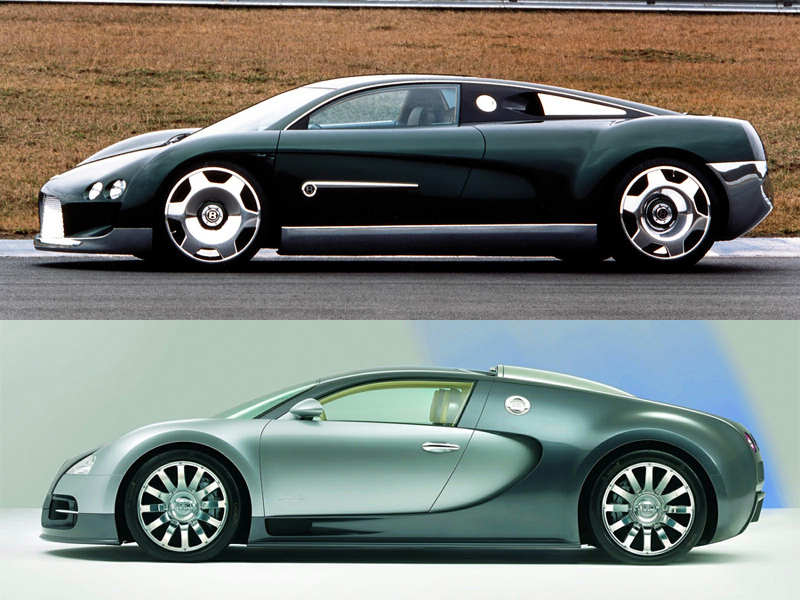
 Is it only me... or  the Veyron looks a bit like  this Bentley Hunaudières ?


Bugatti_Veyron_vs_Bentley_Hunaudieres

The Bentley Hunaudières is a concept car built by Bentley for the 1999 Geneva Salon International de l'Auto. It is powered by a Volkswagen 8.0-litre, naturally aspirated, W16 engine that generates 623 brake horsepower (465 kW; 632 PS) of power at 6,000 revolutions per minute and 760 newton metres (560 lb·ft) of torque at 4,000 rpm in conjunction with a five-speed manual transmission. It is capable of a 350 kilometres per hour (220 mph) top speed
Add to this 4 turbos and you have the Veyron engine...!

Name


The Hunaudières' name pays homage to the famous straight of Circuit de la Sarthe where Sir Tim Birkin in a "Blower Bentley" overtook Rudolf Carraciola in a Mercedes-Benz SSK at 125 miles per hour (201 km/h) with one wheel on the grass down the Hunaudières straight.


1999 Bentley Hunaudieres Concept

Production


The concept, along with the similar Audi Rosemeyer, lead to the production of the Bugatti Veyron by parent Volkswagen.

???????????????????????????????????????????????????? 4049719454_b096c6ab79

More Photos of the Hunaudières

[gallery ids="1429,1431,1432,1437,1436,1435,1434,1433"]

Sunday, May 19, 2013

Video: McLaren MP4 12C by Drive Magazine...!

Drive Magazine celebrates it's 200th issue with...
....a road trip to remember!


Drive_Magazine_Issue_Nr_200


The 625 HP McLaren MP4-12C is ours for three days. No less than 1,500 km to cover and the world renown Route Napoleon beckons. Can you think of a better way to test Woking's answer to the Ferrari 458 Italia?


From Milano to Grenoble, through  the French Riviera & Cannes. Unfortunately you won't understand much (it's inGreek), but the pictures and the sound are really worth it!  I Hope that Drive's Crew will set up  english subtitles for this video. Enjoy the incredible cinematography by Drive!


[youtube http://www.youtube.com/watch?v=jb7cHRsaDEU]


Check here our post about the F12 Berlinetta by Drive


Check here  more Drive videos...


Snap Shots of this Video


[gallery ids="1312,1316,1317,1314,1315,1318,1319,1320,1324,1313,1321,1322"]

[Source: Drive]

Thursday, May 16, 2013

Video: Chris Harris on...Porsche 918 Spyder!

Chris Harris : It's not a finished car, and there was virtually no time, but when Porsche asks if you want a quick spin in a development 918 you get on the plane.

Enjoy the Video...!

[youtube http://www.youtube.com/watch?v=mu_GezgxQ4o]

Wednesday, May 8, 2013

Video: Dubai's Police Supercars Fleet...

Where do we sign up to work for the Dubai's Police...?

In the clip, we see a 426hp Chevrolet Camaro SS Coupe, a 660hp V12-powered Ferrari FF and the 350km/h (218mph) Lamborghini Aventador LP700-4, but that's not the entire fleet, as according to GulfNews, the dream-team of Dubai's cop cars also includes an Aston Martin One-77 (yes, one of 77 made!), a Bentley and a Mercedes-Benz SLS AMG!

[youtube http://www.youtube.com/watch?v=9nC-qh0NA74]

Major General Khamis Mattar Al Mazeina, Deputy Chief of Dubai Police, told the news site that the department upgraded their fleet of sports and super cars after the greatly positive response from the worldwide public when the first Lamborghinis hit the road in police-livery.

“Those cars will be used for road security in different areas of Dubai,” he said, adding that they will be dispatched to tourists arrears and won't be chasing thieves, as “Dubai is a safe oasis for residents and tourists and we want each and every one to enjoy our city.”

More Dubai's Police  SuperCars
[youtube http://www.youtube.com/watch?v=OYX3YXnwF9k]

[youtube http://www.youtube.com/watch?v=OYX3YXnwF9k]

[Source: You Tube via carscoops.com]

Monday, May 6, 2013

Porsche 911 GT2 RS vs Ferrari 599 GTO @Nordschleife by Chris Harris!

Evo's  Porsche vs Ferrari celebration heads to the Nurburgring.
Twin-turbocharged 611bhp GT2 RS meets V12-engined 661bhp 599 GTO


Porsche_911_GT2_RS_997_vs_Ferrari_599_GTO

The War


Battles within battles, within battles. As the day passed, it became increasingly apparent that this was much more than another clash of posh Beetle and posh Fiat. Yes, the old rivalry was simmering away nicely, providing a robust undercurrent of niggle to a contest riven with power – at 1272bhp, more power than has ever previously been seen in a Porsche and Ferrari twin test. But there was more: front engine versus rear, natural aspiration versus turbocharging and paddles versus stick. Looking back, Ferrari versus Porsche was just one battle within a war.


[caption id="attachment_1138" align="alignnone" width="560"]Ferrari_F40_vs_Porsche_959 One of the battles in the Ferrari-Porsche War[/caption]

The Place


Having driven both cars in the past six months, it was clear this test would be best conducted away from the open road. They may be completely useable on the street, in fact both come very close to matching their ‘ordinary’ donor machines in this respect, but their performance demands space for higher speeds. Days earlier, a text message had arrived suggesting that a GTO would be present at a Nürburgring trackday. I prepared the sale of an organ to locate a GT2 RS.


[caption id="attachment_1067" align="alignnone" width="560"]8073871289_2dffb63c43_b Nurburgring Nordschleife[/caption]

The Cars


Trepidation is the emotion you feel in anticipation of an event of unknown and potentially worrying outcome, but its remit doesn’t cover the stomach-crunching nausea induced by a cloud-burst just north of Frankfurt. I’m driving the GT2 RS and the weather is biblical: the wipers are fixed in that crazy 911-on-wet-Autobahn setting, swishing like a hummingbird’s wings, but are helpless in the face such a volume of water. This isn’t good.


Porsche_911_GT2_RS_997_at_Nurburgring_2


Maximum speed in these conditions is no more than 110kph, and you concentrate hard because 4mm of Michelin Pilot Sport Cup tread (the Ferrari’s Michelin Supersports have a full 7mm)and 611bhp do not enjoy flooded asphalt. The traction light flashes so often you wonder if the bulb will blow, and the car will still heave a long way out of shape before the computer gathers it back up. If it’s like this at the Ring, we might as well use a Riva speedboat.


But the curious macroclimate that lurks in the Eifel hills doesn’t conform to prevailing weather conditions. I nose the 911 off the Autobahn with 20km left to the circuit gates and the road is still sodden, but as we climb it clears and the road dries. Fingers crossed it remains that way.


Hero status greets the RS in the car park. People crowd around it, point, shrug and grin. Until the moment that a certain 599cc V12 sparks into life and, with the suddenness of a teenage girl spotting the school stud in a crowd of science scholars, the Porsche is dropped.


We take some photographs and the weather does its best to worry us: the occasional squall of drizzle and strong wind rushes through. Photographer Lipman growls when I call time and tell him I need to get driving, but for once his suspicions – that I’m keen to play at the expense of honest graft – are unfounded. Truth is, I’m terrified by the prospect of the GT2 RS around the Nordschleife.


Porsche_911_GT2_RS_997_at_Nurburgring_Nordschleife


This particular RS has no cage and no air-con – it is as light as it can be. Thanks to the horrid weather I haven’t yet had a chance to acclimatise to the car on full boost, but as it rockets away on that first lap, I’m not sure you ever fully come to terms with a 2wd 911 that’ll hit 186mph from a standing start in 28sec. The sheer thrust is magnificent, addictive and, as we pile into Tiergarten way, way too fast on this first attempt, also cause for a complete recalibration of braking zones and entry speeds. I’ve been guilty of calling this car a turbocharged GT3 RS, but I now have to apologise and retract that statement – this car is an animal compared with that tiddler. Short-shifting on the run down to Schwedenkreuz, it hits an indicated 165mph.


Porsche_911_GT2_RS_997_Interior_1


But it’s already understeering too much – way too much. Chase the throttle in a turn and the front tyres never seem to find anything like the purchase they, or you, need. Rear traction is spectacular, but that just compounds the nose-ploughing. Baffled, I check the tyre pressure monitor, which reveals the problem: set at street pressures, a GT2 RS appears to have about three corners at track speed before the pressures hit danger point. We complete the lap, release air and try again.


The balance is far better, but the experience still isn’t as pure as perhaps I’d expected, nor is it as fluid as a GT3 RS. Still the car has some unwanted understeer, but the speeds are mind-blowing: it rockets from any kind of turn and arrives at braking zones 15-25mph faster that anything I’ve driven here before. Convinced operator-error is playing a part, I try to work around the problem the only way possible – by slowing the car even more in the braking zones and being less greedy with entry speeds. The difference is remarkable: suddenly the car finds a rhythm, the front axle hooks up and the frustration disappears.


The GT2 RS’s problem is quite simply one of excess pace. It clears corner exits so effectively and steams up to such bizarre speeds that you forget to slow the car enough for the front tyres to have any chance of working in the following turn. Perhaps it’s the nature of the acceleration that adds to the confusion? Being force-fed, the Porsche makes very little noise; wear a crash helmet and you have to keep an eye on the tiny shift-light to have any idea what’s going on. It just surges and surges. I love the gearchange though: physical and fast. You keep bunging more gears at that motor but its 516lb ft gobbles them the way the Cookie Monster does Oreos.


Even so, during those rare moments when the track is clear, I still feel like I’m riding some rocket-sled. Connected, yes, but never quite equipped to extract the absolute maximum from the car. Grow a pair, man!


It takes a very special kind of human being to invite you to drive their £350,000 Ferrari around the world’s most shunt-some circuit, but the words have yet to be invented to describe the man who does this, then encourages you to go flat-out and wants to sit next to you while you do it.


Ferrari_599_GTO_at_Nordschleife


Three corners in, approaching the left-hander after T13, as the rear axle arcs wide the very instant the throttle closes, it all feels like a disaster waiting to happen. I catch a bit of the slide and the software mops up the rest of it. When Raffaele de Simone told me at the launch event that the GTO had been set up like a racer to be deliberately unstable in the name of agility, I smiled. When I experienced that razor-sharp response and the natural downside – severe punishment of a trailing throttle in any turn – I smiled again. Partly because the systems are so clever but also, as I now realise, because Fiorano’s open spaces and generous run-off areas don’t engender the same terror as the Ring…


Ferrari_599_GTO_at_Nurburgring_2


So at first you abandon any notion of trail-braking in the 599 GTO until you have acclimatised completely to the car’s controls. These are both lighter and less feel-some than the Porsche’s – where you wrestle with the 911, you actually guide the GTO, learning how to coax the best from it.


Its front end is quite extraordinary, the 275-section Michelin SuperSports allowing the car to tip in while carrying vast speed. Here it holds a clear advantage over the Porsche, whose smaller 245- section fronts just can’t generate the same grip.


Ferrari_599_GTO_Wheel


The Battle


So many of these mini-battles can actually be illustrated in a single turn. The cars are so different, their behaviour so foreign to each other, that the driving styles required to extract the best from them mark opposite ends of the motoring spectrum.


Porsche_911_GT2_RS_997_vs_Ferrari_599_GTO_3


The Ferrari excels on the way in: those new CCM brakes and ceramic pads leave you hanging in your belts, the nose is almost magnetically attracted to the apex and, once it takes a set, the mechanical grip is superb. But with your brain/throttle interface still set to the GT2 RS, you want to gas it early, and the GTO doesn’t want to play ball. The traction control won’t sanction full power and the accompanying wriggle from the hips confirms why. At this point the Porsche just squats and runs. It loses slightly on entry speed, nothing in the braking zone, and takes the Ferrari to the cleaners post-clipping-point, and you only truly appreciate how spectacularly efficient it is in this respect when you attempt to cajole the GTO into the same exit speeds. It just can’t match the Porsche.


Experientially, then, they couldn’t be more different. The Porsche is physical to operate but mute; the Ferrari is delicate to the point of numbness, but its noise is perhaps unsurpassed in the world of performance cars. It does feel less potent than the Porsche though, and this is borne out on a run onto the 2.1km main straight: the RS is the quicker of the two in a straight line, but then so it should be because its power-to-weight and torque-to-weight figures beat the GTO’s. For the record, we don’t get beyond 190mph in either of them.


In terms of plain efficiency, there’s little the Porsche can do to touch the latest Ferrari F1 transmission. Up-shift times barely register, and working back through the ’box is made even easier by the ‘hold’ function that allows you to just hold the left paddle and watch the computer shift as many times as it feels necessary.


It frees up valuable brain capacity for positioning purposes too: you see, the GTO really is a big car, much bigger than the 911. And it weighs 1605kg with fluids, making it well over 200kg heavier than the RS despite its aluminium construction. Accordingly, despite its trick real-time reactive Skyhook dampers and fast rack, there’s always a sense of inertia in the Ferrari. It’s not laziness – the car’s too sharp for that to be the case – more an underlying sense that multiple direction changes require the driver to really be thinking ahead.


The engine is plain sensational: a musical instrument providing linear propulsion all the way from 2000 to 8500rpm. The Porsche’s motor is certainly more effective, but it lacks the throttle response and it feels like a nameless propulsion device after the V12. Vast, explosive – but just a device.


Ferrari_599_GTO_Engine_Bay


We run two fast laps in the GTO, and with familiarity and sensitivity comes increased speed. Traction is definitely the limiting factor for the car around here: I’m committed to leaving the systems on, albeit in Race mode to allow some slip, but, in just about every exit zone, the throttle is gently controlled to allow the Michelins to take purchase. It is a remarkable experience though, especially running fast through Schwedenkreuz, feeling the downforce working the chassis into the surface, clipping down two gears, carrying seemingly impossible speed into the right- hander at Ahremberg and then listening to that V12 jangling the conifers on the run down into the Foxhole. Spellbinding stuff.


Later, when they’re stationary in the car park, there’s the chance to consider them as objects. Earlier that morning the RS had felt like the most special object on four wheels, but Ferrari has recently re-written the rules on desirability and the GTO – twice the price of the Porsche remember – makes the 911 feel a little ‘white goods’ by comparison. The GTO is festooned with gorgeous little details, littered with expensive carbon and trimmed with sexy materials. After this, the Porsche feels what it is: a very fast version of a 911, with the proviso that for 911-geeks (a growing population, it would seem) there’s still plenty to drool over, especially that carbon bonnet and rear diffuser.


Before leaving for Stuttgart, I run two more fast laps in the Porsche, and I reach the point that exists in every fast 911 – where your mind tells you that every millimetre of suspension travel (we’re running with the dampers soft and the traction control off) is being used and that to push harder would be to tempt fate, but you try even harder and the car somehow delivers even more. Porsche’s recorded 7min 18sec lap is entirely believable, but at that pace the GT2 RS is an animal: one that needs respect and, most importantly, real diligence in the braking zones to keep those entry speeds in check. After this the rain falls, and the fast laps are over. Given the weather in the rest of Germany, we’ve been incredibly lucky.


Porsche_911_GT2_RS_997_at_Nurburgring_Nordschleife_1


The Winner


And these individual battles? So many different answers, and so many of them subjective. I can’t help but feel that the 911 must be smirking at the preposterous increases in both power and torque outputs, because they highlight the benefits of the rear-engined layout. Yes, the GTO has perfect weight distribution, but it just can’t use its firepower on the exit of a corner the way the Porsche can.


Naturally, the 911 feels raw, almost antiquated, after a Ferrari whose gearchange requires you to move, at most, four fingers. I can see arguments in favour of both approaches, just as I would understand anyone who felt giddy every time the Porsche’s crazy mid-range unleashed another dose of thrust, or people who simply couldn’t believe that a better, more life-affirming internal combustion engine exists than the one fitted to the 599 GTO. The noise alone is worth £100K; possibly more.


Porsche_911_GT2_RS_997_vs_Ferrari_599_GTO_Nordschleife


And so I drove back south with all of this swilling through my head: whether there could actually be a winner amongst two all-time greats. Whether there should actually be a winner when they, bizarrely, actually complement each other while simultaneously exposing each others’ deficiencies. And of course the reality is that someone with the bunce to buy a GTO can almost certainly have a GT2 RS as well.


And then I realised the folly of attempting to make an objective call. I’m writing this, I’ve driven them both on the same day – so which one would I have? The Porsche: because it represents everything I would want in this type of car. And I would understand anyone who called it differently. Honestly: we’ve never had it better than we have it now.


Photo Gallery


[gallery ids="1135,1134,1131,1132,1133,1126,1118,1125,1119,1124,1117,1127,1116,1136,1123,1130,1121,1129,1122,1128,1120"]

[Source: evo_logo]

Lamborghini's 50th Anniversary by GTspirit

GTspirit Celebrates 50th Anniversary of Lamborghini


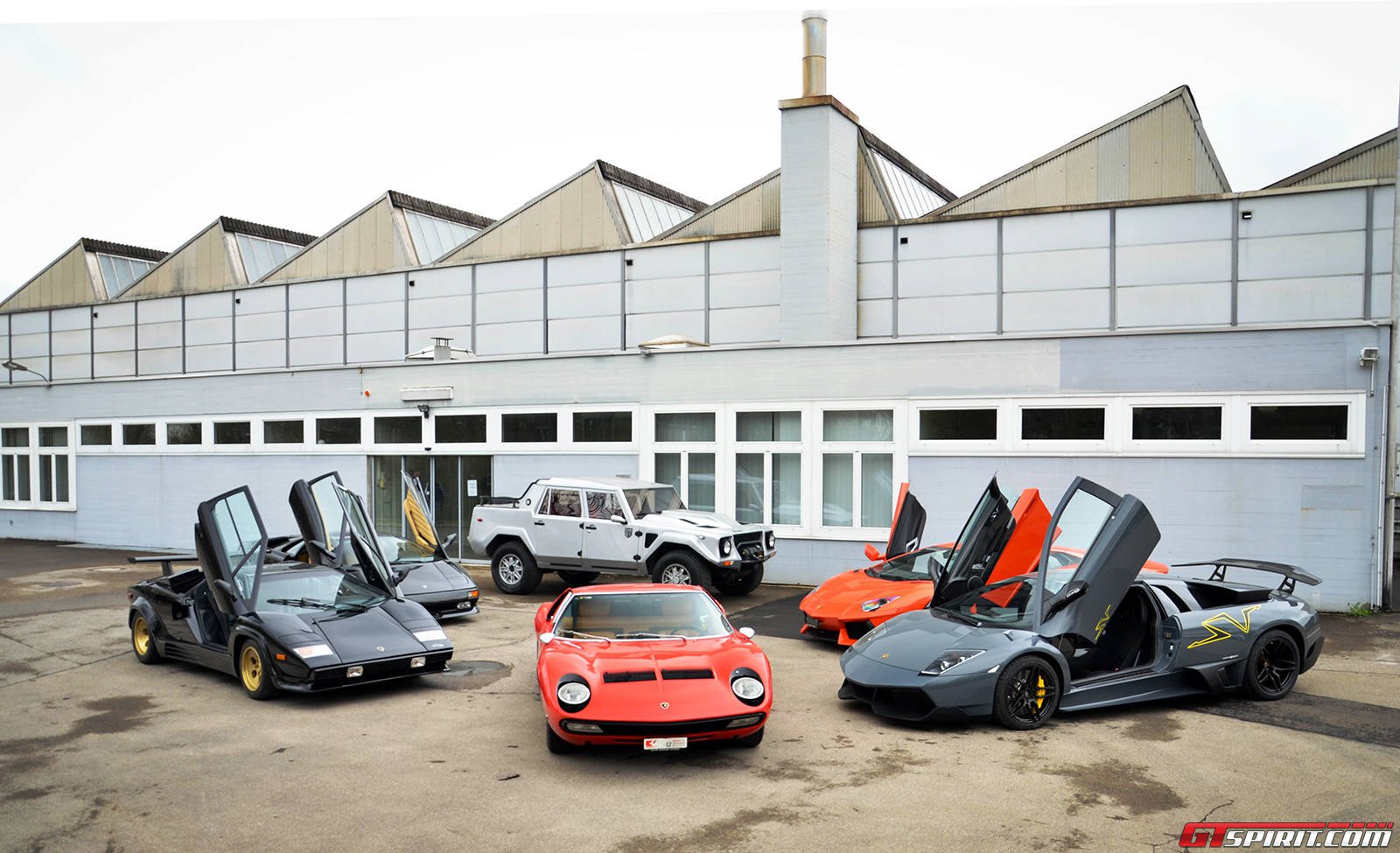
The year 2013 marks the 50th anniversary of Lamborghini Automobili. To celebrate this milestone in the history of the Italian supercar manufacturer GTspirit spend a day with some of the highlights produced in the last 50 years. The official Lamborghini 50th anniversary celebrations take place around the globe during the entire year, the climax of the festivities will take place this week with the 50th anniversary Grand Tour. A convoy of 350 Lamborghinis will leave from Milan on 8 May and travel 1200 kilometers through Italy to the finish at the Lamborghini Headquarters in Sant’Agata Bolognese.


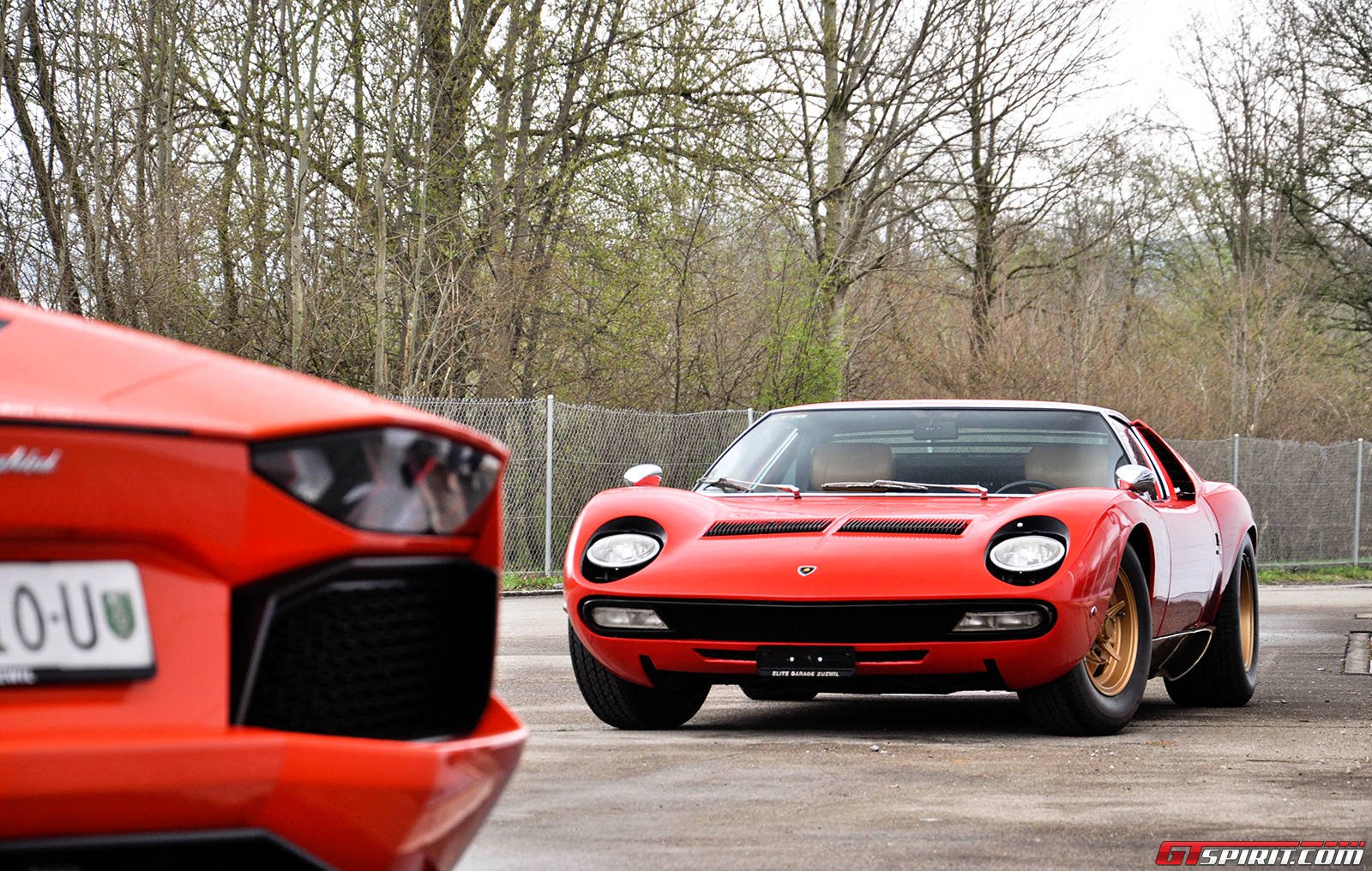
Lamborghini Miura SV


The Miura wasn’t the first Lamborghini to leave the factory, yet it enjoys a reputation as the most desirable of all the Lamborghini’s. You could even go as far as describing the Miura as the car that defined the Lamborghini brand, more so, the car that defined the supercar. Just from looking at the Miura, you understand that unique blend of extreme styling with extreme performance. The Lamborghini Miura SV is the ultimate iteration of this. Despite the defining status of the Miura, it wasn’t actually a car that company founder Ferruccio Lamborghini either commissioned or approved. Ferruccio’s preference was towards high-powered GT cars. The Miura was actually developed after hours by Lamborghini engineers. Yet the Gandini design attracted so much attention when it first went on display that Ferruccio had no other option but to give it the green light for production.


The Miura was the first Lamborghini to depart from the GT layout in favour of a transversely-mounted mid-engine layout. The 3.9 litre V12 engine powered the rear wheels with 350hp. By 1968, the Miura was selling well so Lamborghini saw fit to make a few updates. The Miura S was born. Three years later in 1971 Lamborghini launched another updated Miura; the Miura SV. The Lamborghini Miura SV gets the same 3.9 litre V12 as earlier cars, uprated to a full-fat 385hp. 150 were built in total, compared to 474 standard Miura’s and 140 Miura S models. Options were simply limited to dry-sump lubrication and a self-blocking differential. The rear arches also grew by 13mm to accommodate new Pirelli tyres and a revised suspension geometry. Changes were made at the front and the interior gained a genuine leather upholstery. In its time, the Lamborghini Miura SV was the fastest car in the word. Strictly speaking, the Miura SV wasn’t openly available to customers. If you wanted a Lamborghini Miura SV, you had to made that specific request to the factory. Several were taken to even further extremes, creating Lamborghini Miura SVJ editions. An epic car to start an epic tradition. The Lamborghini Miura was in production from 1966 until 1972 and in total 764 Miuras have been build. The Miura is powered by a 3.9 litre V12 engine and in the original Miura this engine delivered 350hp with a weight of just 1,125 kg. The 1971 Lamborghini Miura SV we had on our anniversary shoot was more powerful with 385hp but also 173 kg heavier mainly due to the wider wheels. The top speed of the Miura SV is about 270 km/h and the sprint from zero to 100 km/h takes roughly 5,5 seconds. Believe it or not the Miura SV cost new around $ 20,000 in 1971 and due to popular demand and iconic status good low mileage examples are now easily worth in excess of 1,200,000 USD.


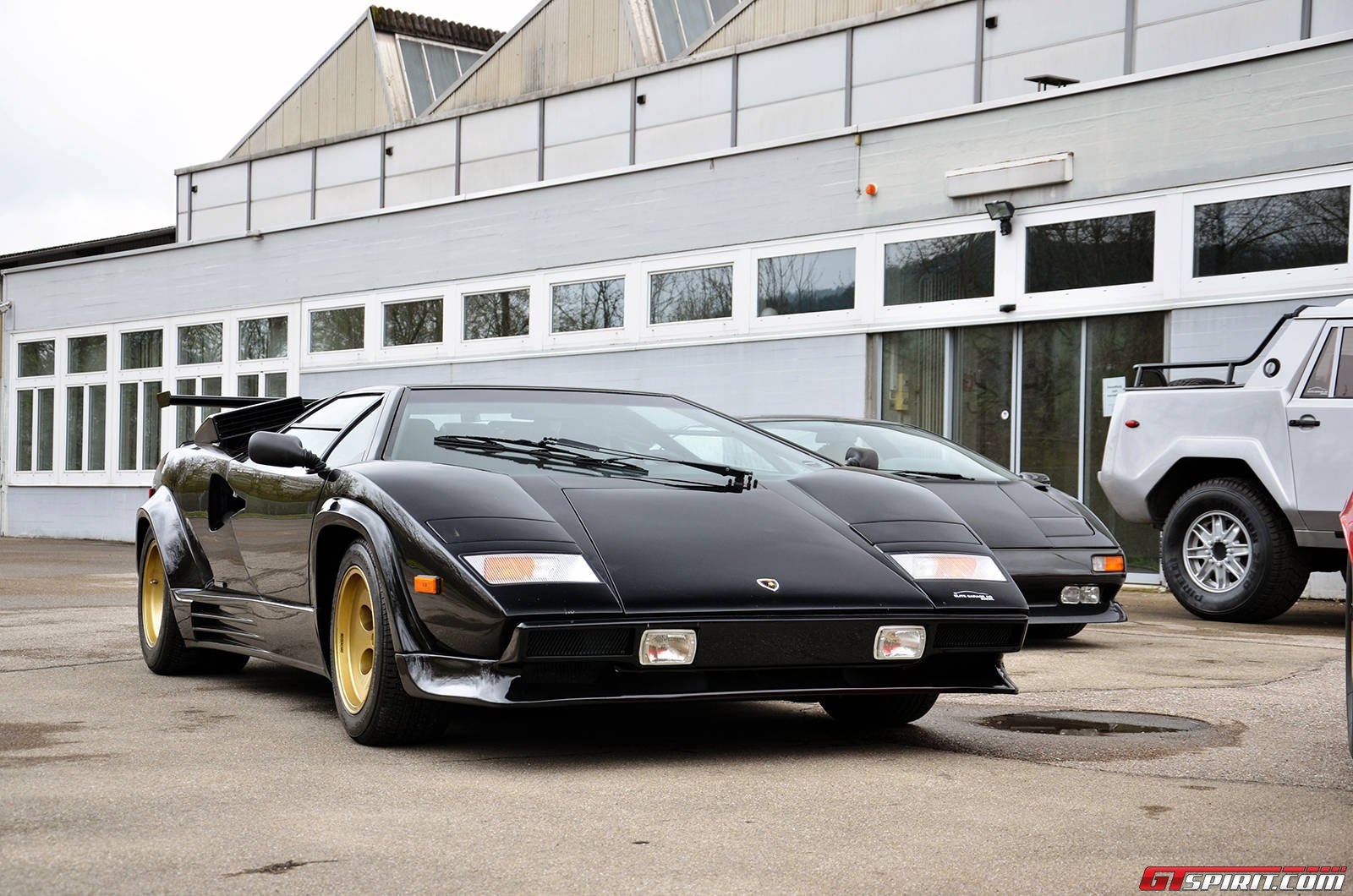
Lamborghini Countach 5000 QV


The Lamborghini Countach was designed, once again, by Marcello Gandini, following the success of his earlier Lamborghini Miura design. From one supercar to the next, Gandini created yet another classic. The Countach is wide and low, yet surprisingly short in comparison to modern day Lamborghini’s. The shape pioneers what designers call the ‘cabin-forward’ design, allowing Lamborghini a larger space to fit the engine. For the first time, Lamborghini fitted a set of scissor doors to their flagship model. The car’s tubular spaceframe chassis meant that it naturally featured high door sills. What started out as a practical solution to allow customers easier entry and exit from the vehicle, quickly became a defining feature for the extreme V12 Lamborghini models.


The car we shot was the Lamborghini Countach 5000 QV. Essentially, the 5000 QV came about as a direct result of the Ferrari TestaRossa. Lamborghini needed an answer for Ferrari’s latest and greatest. Taking the 10 year old Countach design, Lamborghini added extra power and some visual enhancements before presenting the new car at the Geneva Motor Show 1985. With its 5.0 litre V12 engine and 455hp power rating, the Lamborghini Countach 5000 QV became an instant hit. Downdraft Weber carburetors were used for the first time on this car, which meant a power bulge had to be fitted to the rear hood. As a result, the Countach 5000 QV suffered from rear visibility issues, although owners will probably tell you that in the grand scheme of things, this was a pretty minor issue. The Countach 5000 QV received a facelift in 1987. This example was built in 1988 and features a different set of side sills to the original model and a new rear spoiler. The Lamborghini Countach was produced from 1974 until 1990 and in total 2,042 Countachs have left the factory. The original Countach LP 400 had an output of 375hp with a weight of just 1,065 kg. With all the modifications of later models, the 1988 Countach 5000 QV weight 1,490 kg. But despite the extra weigth the 455hp strong 5000 QV reached new heights with a 0-100 km/h sprint in 4,9 seconds. Top speed however was sacrificed and with 295 km/h lower than the 309 km/h of the first gen Countach LP 400. The Countach 5000 QV sold new for around $ 100,000 in the mid 80′s and good examples are worth between 150,000 and 250,000 USD now.


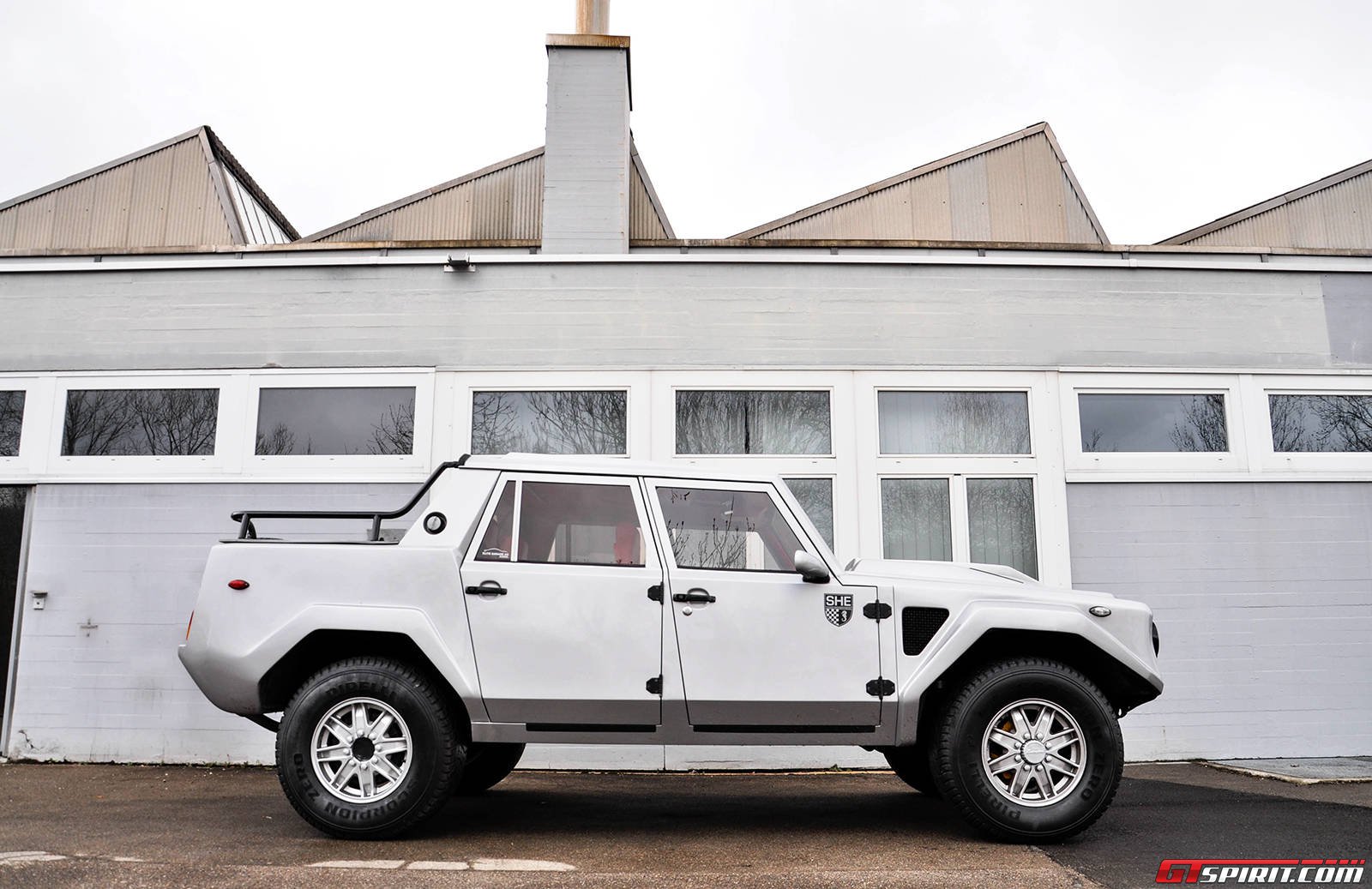
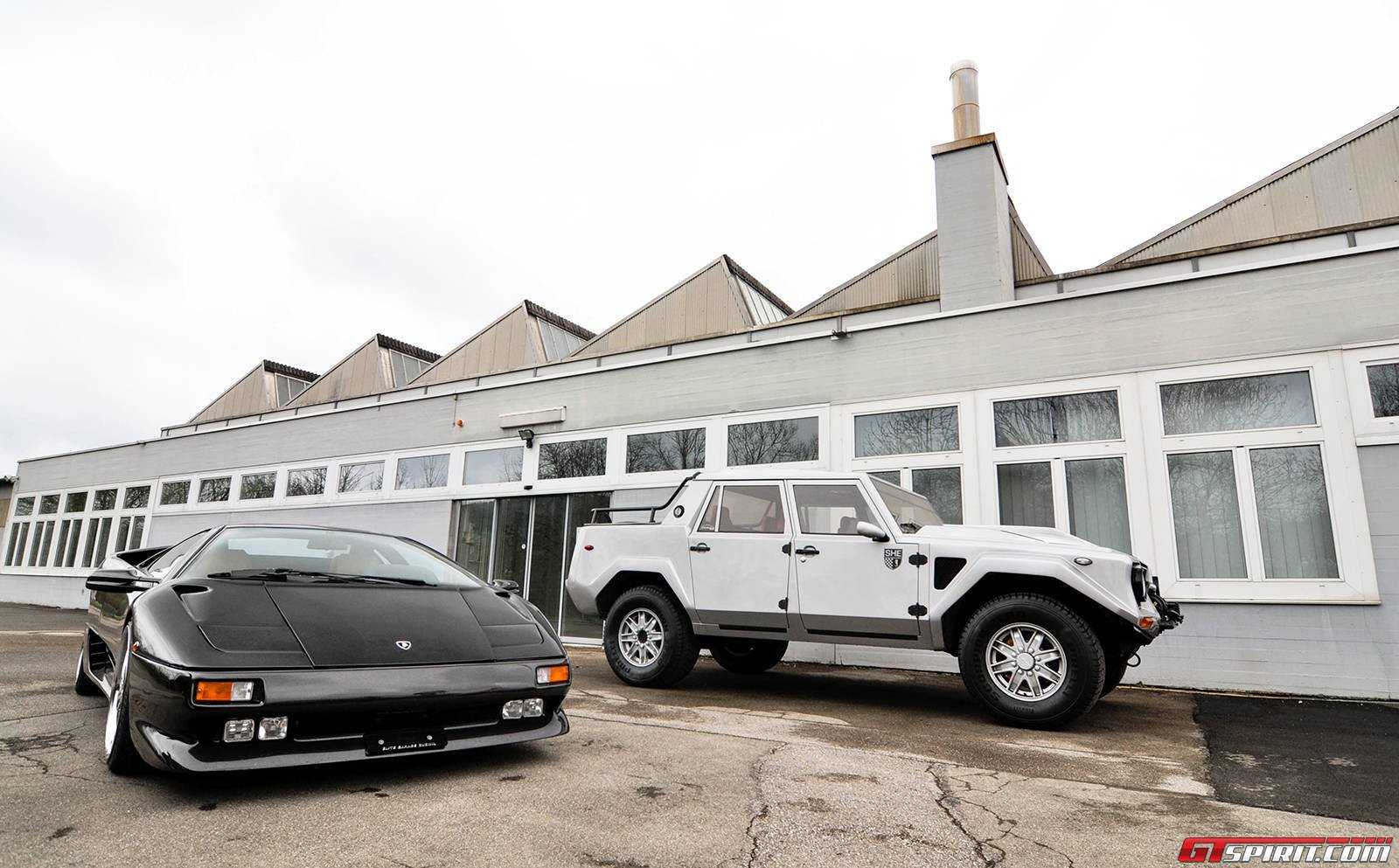
Lamborghini LM 002


The Lamborghini LM002 was Lamborghini’s first foray into the world of off-road vehicles. The LM002 came at a time when SUV’s were actually designed and built with off road driving in mind. The LM002 was originally built as a prototype by Lamborghini in 1977 with selling to the US military in mind. The military never tested it, perhaps on account of the rear engine layout. Instead, Lamborghini took the original prototype back to the drawing board to create the LM002. As you’ve probably worked out already, the Lamborghini LM002 was a massive departure from conventional Lamborghini’s. Yet it retained some of the flair that gave Lamborghini its reputation. Lamborghini fitted their own V12 engine to the LM002 with a displacement of 5.1 litres or even an enhanced 7.2 litre marine V12 unit.


Each LM002 gets a steel tubular chassis, heavy-duty suspension and a lower compression rating tuned to run 94 RON petrol. The very first customer to take delivery was H.R.H. King Hassan of Morocco in late 1986. The LM002 drew plenty of attention with Sylvester Stallone, Tina Turner and Mike Tyson all purchasing a copy. The Lamborghini LM 002 was produced between 1986 and 1993 and 328 were built in total, each handmade for the individual customer. What made the LM002 so special was the 2,700kg weight coupled with the 200km/h plus top speed. Nothing else came close to being as obnoxious and over the top, it was the ‘Rambo Lambo’. Rumours have circulated for years that some 40 examples were exported for foreign militaries, however, this has never been confirmed and is always denied by the factory. The Lamborghini LM 002 changes hands today for between 80,000 and 160,000 USD.


Lamborghini Diablo


The Lamborghini Diablo had a difficult job. Succeeding a car as iconic as the Lamborghini Countach is no easy feat. Marcello Gandini returned once again, penning the design on behalf of legendary design house Bertone. The result, after two redesigns, is the production vehicle you see in the photos. This particular Lamborghini Diablo is a standard launch edition model which the owner has fitted with a few individual aftermarket parts. As is the way with (almost) every Lamborghini model, the Diablo was named after a Spanish fighting bull. The Diablo fought ‘El Chicorro’ in Madrid on 11 July 1869, winning freedom after an aggressive battle. Essentially, that’s the Diablo development personified. Five years of research and development went into creating the production vehicle before it went on display at the Hotel de Paris in Monte Carlo on 21 January 1990.


From launch, the Diablo came fitted with a 5.9 litre V12 engine. As the goal was to create a car that would breach the 200mph barrier, the Diablo got 492hp, making it one of the fastest cars available at the time. Initially, power was fed to the rear wheels. In 1993 though, Lamborghini adapted the LM002 four-wheel drive platform to fit the Diablo VT. Rear spoilers were an option for early cars, yet the standard equipment was impressive compared to the Countach. It included fully adjustable seats and steering wheel, electric windows, an Alpine stereo system and power steering. One of the biggest advantages over the Countach in terms of comfort was the complete one-piece window which wound all the way down into the scissor doors. Post-Audi takeover in 1998, the Diablo received an update, culminating in the special edition Lamborghini Diablo GT. 83 were sold, fitted with a 6.0 litre V12 engine and a peak power output of 575hp. It’s these cars that remain the most desirable of the Diablo range. The GT was the last of the rear-wheel drive V12 Lamborghini’s with the benefit of modern Lamborghini refinement. The Lamborghini Diablo was produced from 1990 and 2001 and in total 2,884 Diablos left the factory. Today you can pick up a first-gen Diablo for about $ 100,000. The rare Diablo SVR (only 31 produced) will set you back 150 to 200k USD. But most desired are the 1999 Diablo GT and 2000 Diablo GTR that are both race versions of the latest generation Diablo. Expect to pay between 350,000 and 400,000 USD for a good Diablo GT and a rare Diablo GTR went up for sale two years ago with an asking price of nearly 700,000 USD.


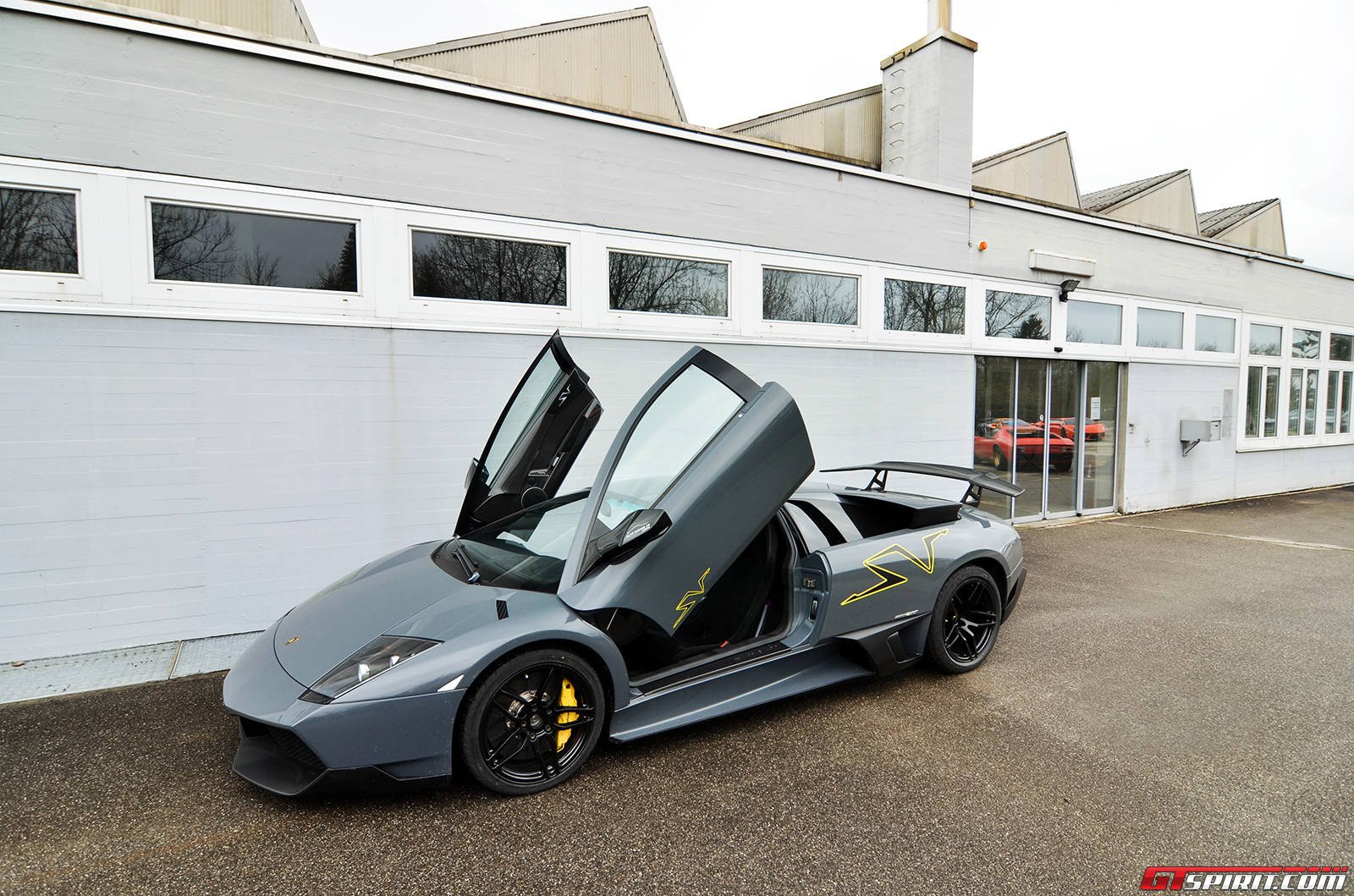
Lamborghini Murcielago LP670-4 SV


The Lamborghini Murcielago LP670-4 SV is the ultimate iteration of the Lamborghini Murcielago platform. The Murcielago received its official unveil at the Frankfurt Motor Show 2001, followed by a refresh at the Geneva Motor Show 2006 in the form of the Lamborghini Murcielago LP640. The Lamborghini Murcielago LP670-4 SV finally took centre stage at the Geneva Motor Show 2009. The name Murcielago derives, in traditional Lamborghini fashion, from a legendary Spanish fighting bull of the same name. Legend tells the story of matador Rafael Molina ‘Largertijo’ subjecting the bull to 24 spears. Remarkably, the bull remained defiant, causing the matador to spare Murcielago’s life. Much in the same way that the Lamborghini Murcielago fathered a line of potent supercars, Murcielago’s blood line can be traced into a handful of Spain’s strongest fighting bulls.


Part of the weight saving is due to a redesigned exhaust muffler box. We assume that it isn’t entirely by accident that the LP670-4 SV sounds better as a result. The choice of a six-speed e-Gear or six-speed manual gearbox has a small affect on performance, yet both options reach a top speed of 337km/h with 100km/h sprint disposed of in 3.2 seconds. Design wise, the Lamborghini model range modernises the classic Lamborghini look rather than revolutionising. With scissor doors and a low, wide look, the Murcielago is unmistakeably from Sant’Agata Bolognese. The SV was offered with an optional aeropack wind, as demonstrated by the car you see in the gallery. This provided an extreme new look for an extreme new car. Fully carbon fibre, with carbon fibre supporting brackets, the spoiler produces extra downforce at high speed. Inside, the Murcielago LP670-4 SV interior is more sensible. As with all supercars of its time, the SV makes extensive use of Alcantara. The steering wheel and display dials are almost non-descript, yet you definitely feel as though you’ve stepped into somewhere special. The Lamborghini Murcielago was produced from 2001 until 2010 and in total 4,099 Murcielagos have been produced. Unlike the original plan to produce 350 Murcielago LP670-4 SV’s, only 186 SuperVeloces were buid before the factory stopped production to make way for the Aventador. The Lamborghini Murcielago SuperVeloce now sells for between 350,000 and 400,000 USD, about the same price the SV sold for new in 2009 and 2010.


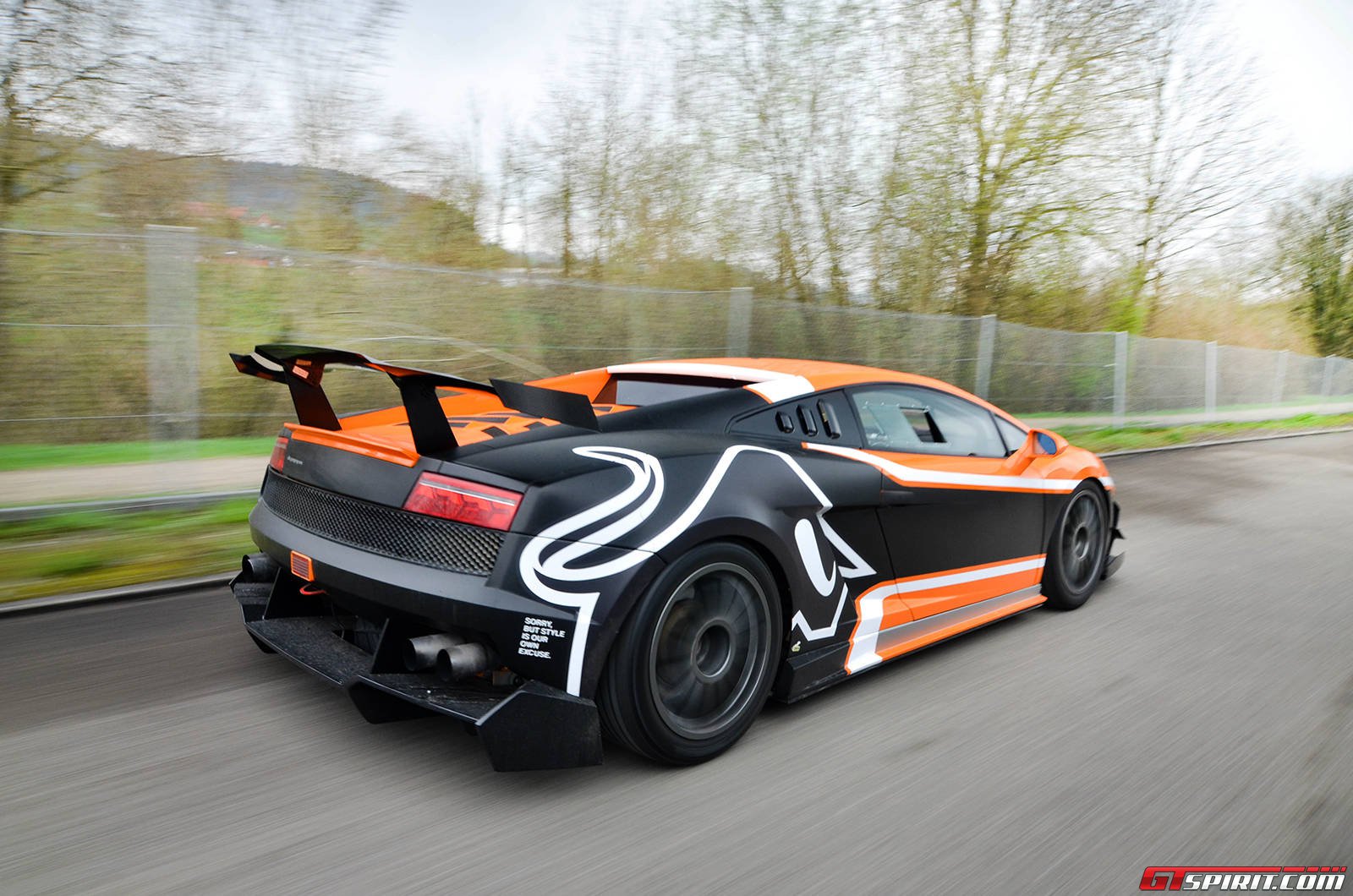
Lamborghini Gallardo LP560-4 Blancpain Super Trofeo


The Lamborghini Gallardo LP560-4 Blancpain Super Trofeo is what you would call the odd-one out in our lineup. It is the only car that doesn’t feature a V12 powerplant. Instead, it borrows a 5.0 litre V10 engine from the Audi family product catalogue. The reason we have included it is simply because the Gallardo was such an important car for the Italian auto maker. For the first time, the Gallardo allowed Lamborghini to sell cars in numbers. We have made some adjustments though. To fit in with the extreme nature of the V12 engined cars, we thought it would be wise to procure the most extreme Gallardo model to date. The Lamborghini Gallardo LP560-4 Blancpain Super Trofeo was part of a customer racing program. Built on top of a production Gallardo model, the Super Trofeo is a no-holds barred racer.


The V10 engine grew out of the 4.2 litre Audi V8 engine. The V10 adds two extra cylinders to the mix with four valves per cylinder and a total naturally aspirated power output of 500hp. In 2006, the Gallardo received its LP560-4 refresh. Power shot up to 560hp with the V10 now stretched to 5.2 litres. The 5.2 litre V10 is the engine that powers the first generation Super Trofeo we have before us today. The Lamborghini Gallardo LP560-4 Super Trofeo features an e.gear six-speed robotized gearbox transferring power to the permanent all-wheel drive system. The reworked suspension components and the low resistance exhaust system help produce an extreme racer. 10 years into its product life-cycle, we have the Lamborghini Gallardo LP570-4 Superleggera and the Lamborghini LP560-4 available on the road to customers. The later received a mild visual facelift at the Paris Motor Show 2012, yet many suspect that this won’t slow the Gallardo’s advancing age. Hopefully Lamborghini will replace the Gallardo sooner rather than later! The Lamborghini Gallardo was produced from 2003 to date and so far over 13,000 Gallardos have been sold. Despite its continued popularity, especially in Asia, the Gallardo is overdue for replacement. The Gallardo currently sells between 190,000 USD for the rear-wheel drive Gallardo 550-2 and 260,000 USD for the top of the line LP570-4 Super Trofeo Stradale.


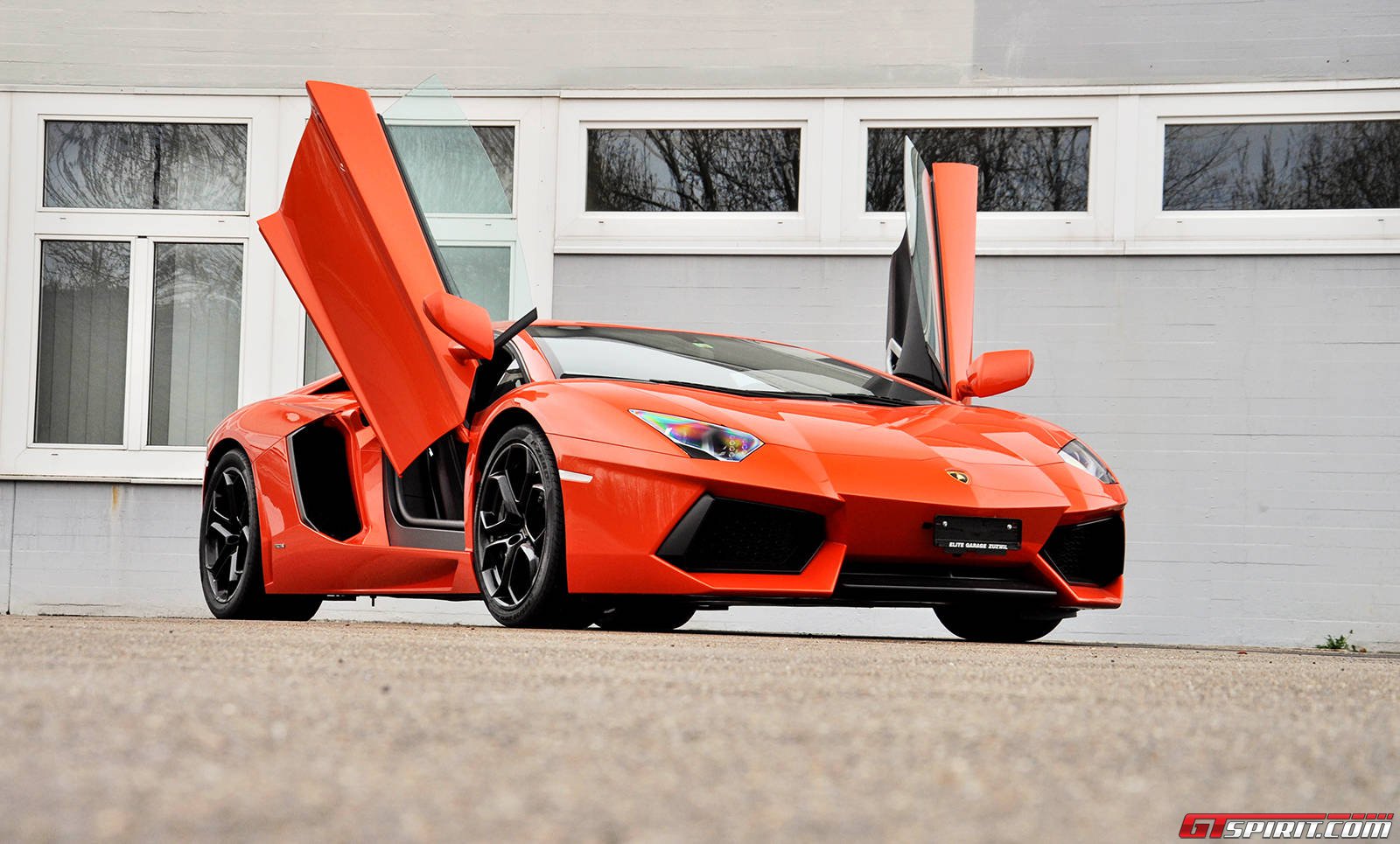
Lamborghini Aventador


The Lamborghini Aventador is Lamborghini’s latest and greatest. Unveiled at the Geneva Motor Show 2011, it set precedents for the supercar market. For the Aventador, Lamborghini re-engineered the iconic V12 engine, optimising it for a new generation. Bored out to 6.5 litres, the L359 V12 produces 700hp and 690Nm of torque. It is the second V12 engine developed in house by the legendary Italian marque; the fourth overall. All other V12 engines fitted to previous Lamborghini models derive from the original 350GT. It weighs 18.1kgs less than the equivalent Murcièlago engine and sits 2.8 inches lower in the chassis. Perhaps the weakest point is the continued use of a single plate clutch in preference to a dual plate system. However, Lamborghini are quick to point out the weight saving advantages, not to mention the raw feel of the gear shift.


Under the skin, the Aventador is every bit as modern as its looks and performance suggest. It uses a one piece carbon fibre monocoque to protect occupants. Coupled to the front and rear aluminium suspension frames, the Aventador is extremely stiff, yet sublimely controlled by a sophisticated pushrod spring and damper system. Inside, the Lamborghini Aventador feels more modern than any other V12 engine Lamborghini. There is plenty of leather, a sat nav, a solid speaker system and a comfortable driving system. The starter button is central to the theme of the Lamborghini Aventador. It is accessed by lifting a safety cover. Depress it, with your foot on the brake, and the V12 ignites whilst the fighter jet themed dashboard display flickers into life. The Lamborghini Aventador is produced from 2011 to present and so far over 1,700 Aventadors have been produced. The Aventador currently sells new for between 400,000 and 450,000 USD.


Special thanks to Elite Garage ZuzwilJesper van der Noord Photography and Thom van der Noord Photography!


[Source: gtspirit.com]